80% of data breaches involve compromised credentials. What if access had been properly governed?
What is Data Access Governance
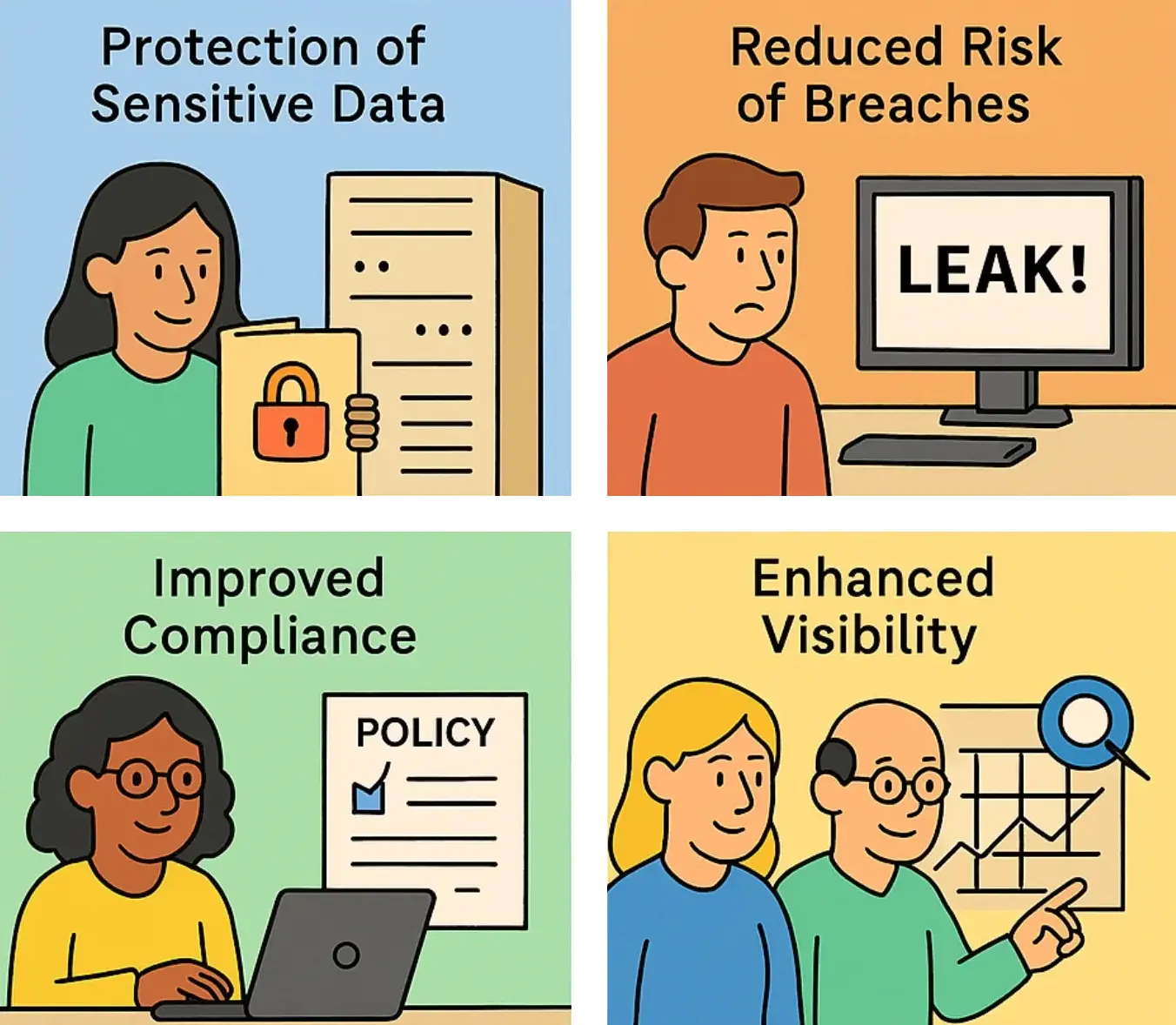
Data Access Governance is the framework of policies, tools, and processes that ensure the right people have the right access to the right data at the right time — and nothing more.
Why Data Access Governance Matters
In today’s data-driven world, controlling who can access what data—and when—is no longer optional. Without proper governance, even the most secure systems can become vulnerable from the inside.
-
Mitigates Security Risks and Prevents Breaches
Many breaches don't come from external attacks, but from over-permissioned users, former employees, or accidental leaks. Data access govenance helps enforce least privilege, meaning users only get access to what they absolutely need.
-
Ensures Regulatory Compliance
Frameworks like GDPR, HIPAA, SOX, and PCI-DSS mandate controls over data access strictly. You must not only restrict access, but also be able to prove who accessed what, when, and why.
-
Protects Reputation and Customer Trust
Data breaches can lead to significant reputational damage and loss of customer trust. Data access governance can demostrate to customers that you take data security seriously.
-
Enables Operational Efficiency
With proper workflow, employees can get the data they need quickly and efficiently, without the hassle of requesting access or dealing with manual approval processes.
-
Reduce Financial and Legal Risks
Proactive data access governance is cheaper than breach remediation. It also helps you avoid costly fines and lawsuits.
Common Challenges
-
Lack of Visibility into Data and Access: Without proper monitoring, it's impossible to know who has access to what data and when.
-
Over-Privileged Users: Employees accumulate unnecessary permissions over time due to role changes, project turnover, or lack of reviews.
-
Manual and Time-Consuming Access Reviews: Many companies still rely on spreadsheets or email threads to review access rights. It’s tedious, error-prone, and not scalable—especially with growing teams and data sources. Manual processes can't keep up with the pace of modern organizations.
-
Complexity of Hybrid and Multi-Cloud Environments: Modern organizations use a mix of on-premises systems, cloud platforms (AWS, Azure), and SaaS apps (Slack, Salesforce). Each environment has unique access controls, making centralized governance nearly impossible. This also includes the challenge across different teams and tools.
-
Balancing Security with Productivity: Strict access controls can frustrate users, leading to shadow IT (e.g., employees using unauthorized Dropbox accounts to share files).
-
Regulatory Complexity: Regulations like GDPR, HIPAA, and CCPA have conflicting or overlapping requirements, complicating policy design.
-
Resistance to Cultural Change: Some users may resist the new access controls, fearing they'll be more difficult to work with.
How to Achieve Data Access Governance
- Identify critical data (e.g. PII, financial records) and applicable regulations (GDPR, HIPAA, etc.).
- Classify data into categories (e.g. public, sensitive, confidential, proprietary) and assign appropriate access controls.
- Define role-based access control policies (RBAC) and automate access reviews.
- Enforce least privilege and apply Just-In-Time (JIT) and time-limited permissions.
- Streamline access requests, approvals and revocations.
- Run regular audits and compliance checks every 3-6 months.
Tools for Data Access Governance
Various specialized tools can help implement robust data access governance:
-
Monitoring and Auditing
Tools like Datadog, IBM Guardium, pgAudit (PostgreSQL), and the MySQL Audit Plugin offer real-time visibility into database activity, track access patterns, and log operations for compliance and security investigations.
-
Identity and Access Management (IAM) Platforms such as Okta and Azure AD help manage user identities, enforce role-based access controls, and automate access workflows.
-
Secrets Management Solutions like AWS KMS, HashiCorp Vault, and Azure Key Vault securely manage credentials, encryption keys, and other sensitive configuration data.
-
Data Classification and Discovery Tools like Varonis, AWS Macie, and Microsoft Purview automatically discover and classify sensitive data, helping you enforce appropriate protection policies.
How Bytebase Handles Data Access Governance
Bytebase is a database DevSecOps platform that implements data access governance across 23+ databases from a single control plane. Instead of stitching together separate tools for IAM, auditing, masking, and access requests, Bytebase handles them in one place.
Role-based access control
Bytebase enforces access at two levels:
- Workspace roles — control who can manage database instances, configure policies, and administer the platform
- Project roles — control who can view, query, or modify specific databases within a project
Roles are tied to individual identities via SSO (Okta, Azure AD, Google Workspace) on Pro and Enterprise plans. No shared admin accounts.
Just-in-time data access
Instead of granting standing access to sensitive databases, Bytebase supports just-in-time (JIT) access. A developer requests temporary access, it goes through approval, and the access expires automatically after a set duration. This eliminates the problem of over-privileged users accumulating permissions over time.
Dynamic data masking
Bytebase applies dynamic data masking at the application layer — sensitive columns are masked in real-time based on the user's role and semantic type classifications. A DBA sees full data; an analyst sees partial masks; a contractor sees full masks. No data is changed at rest. Available on Enterprise plan.
Query access control via SQL Editor
All queries run through Bytebase's SQL Editor, which enforces access policies before execution. Users can only query databases and tables they have permission to access. Every query is logged with the user's identity.
Audit trail
Every action in Bytebase — queries, schema changes, logins, permission changes, approval decisions — is recorded in the audit log with the real user's identity, timestamp, and full SQL text. Logs can be exported via API or streamed as JSON to any SIEM (Datadog, Splunk, Grafana). Available on Pro and Enterprise plans.
Change review and approval
Database changes go through a structured workflow: submit SQL → automated SQL review (200+ rules) → approval → deployment. This enforces separation of duties — the person who writes the SQL cannot be the same person who approves it. Enterprise tier adds custom multi-tier approval workflows.
Summary
Data access governance is a critical component of any organization's security strategy. By implementing the right tools and policies, you can protect sensitive data, ensure regulatory compliance, and maintain a secure and productive work environment.
FAQ
What is data access governance?
Data access governance is the framework of policies, tools, and processes that ensures the right people have the right access to the right data at the right time. It covers access control, auditing, compliance, and data protection across an organization's databases and data systems.
How does data access governance differ from data security?
Data security focuses on protecting data from external threats (encryption, firewalls, intrusion detection). Data access governance focuses on controlling internal access — who can see, query, or modify which data, through what approval process, and with what audit trail. Both are necessary; governance addresses the insider risk that security tools don't cover.
How does Bytebase help with data access governance?
Bytebase provides role-based access control, just-in-time temporary access, dynamic data masking, query-level access control via its SQL Editor, audit logging, and change approval workflows — all from a single platform supporting 23+ databases. It eliminates the need to configure access controls separately in each database engine.